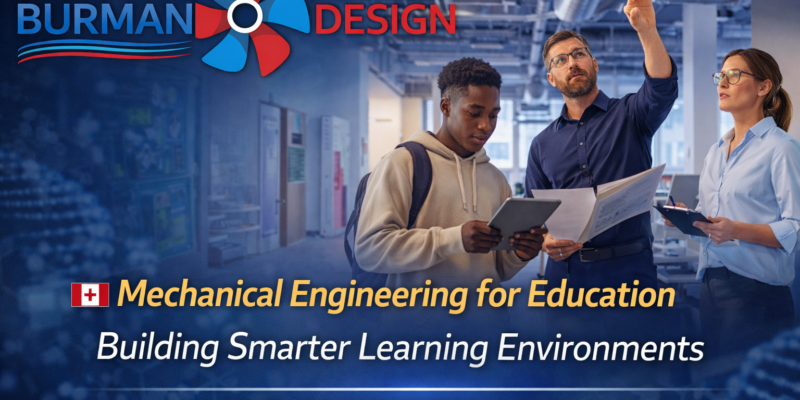
Mechanical Engineering for Education Facilities in Washington plays a crucial role in creating comfortable, efficient, and safe spaces for students, teachers, and staff. From heating and cooling systems to ventilation and energy management, mechanical engineering ensures that educational buildings function smoothly every day.
Modern schools, colleges, and universities demand more than basic infrastructure. They require smart systems that support learning, reduce energy costs, and meet sustainability goals. With expert mechanical engineering, educational institutions can achieve both performance and efficiency.
The Role of Mechanical Systems in Educational Facilities
Mechanical systems are the backbone of any educational building. They control temperature, air quality, water systems, and energy usage. Well-designed systems help create an environment where students can focus and perform at their best.
Key mechanical components in education facilities include:
-
Heating, ventilation, and air conditioning (HVAC) systems
-
Energy management and control systems
-
Plumbing and water distribution
-
Indoor air quality solutions
-
Mechanical rooms and equipment layouts
Effective Mechanical Engineering for Education Facilities in Washington ensures these systems work together seamlessly while meeting local building codes and energy standards.
Importance of Comfort and Indoor Air Quality
Comfortable temperatures and clean air are essential for productive learning environments. Poor ventilation or inconsistent temperatures can affect concentration, attendance, and overall well-being.
Mechanical engineers design systems that:
-
Maintain consistent indoor temperatures
-
Improve air circulation and filtration
-
Reduce humidity and airborne contaminants
-
Support healthy and productive learning spaces
By focusing on indoor environmental quality, educational institutions can create spaces that promote better academic performance.
Sustainable and Energy-Efficient Systems for Modern Campuses
As energy costs rise and environmental concerns grow, schools and universities are increasingly focused on sustainability. Sustainable and Energy-Efficient Building Systems in Washington help institutions reduce operating costs while meeting environmental goals.
Energy-Efficient HVAC Solutions
HVAC systems account for a large portion of a building’s energy use. Modern mechanical engineering focuses on high-efficiency systems that reduce energy consumption without compromising comfort.
Common energy-efficient solutions include:
-
High-efficiency boilers and chillers
-
Variable refrigerant flow (VRF) systems
-
Energy recovery ventilation (ERV)
-
Smart thermostats and building automation
-
Zoned temperature control
These technologies help educational facilities lower utility bills and reduce their carbon footprint.
Smart Building Automation and Controls
Building automation systems play a key role in improving efficiency. These systems monitor and control mechanical equipment in real time, adjusting settings based on occupancy and weather conditions.
Benefits of smart controls include:
-
Reduced energy consumption
-
Improved equipment lifespan
-
Better indoor comfort levels
-
Real-time performance monitoring
-
Lower maintenance costs
Automation allows schools and universities to manage their facilities more effectively while maintaining optimal conditions.
Designing for Long-Term Performance
Educational buildings are long-term investments. Mechanical systems must be durable, adaptable, and easy to maintain. Engineers focus on designs that support future expansion, technology upgrades, and changing educational needs.
Important considerations include:
-
Flexible system layouts
-
Easy maintenance access
-
Scalable equipment capacities
-
Compliance with evolving energy codes
-
Integration with future technologies
Professional Mechanical Engineering for Education Facilities in Washington ensures that systems remain efficient and reliable for years to come.
Partner with Experts for Educational Facility Projects
Choosing experienced mechanical engineers is essential for successful education facility projects. Skilled professionals understand the unique requirements of schools and campuses, from classroom comfort to energy efficiency.
Working with the right engineering team provides:
-
Customised mechanical system designs
-
Compliance with Washington energy codes
-
Efficient project coordination
-
Sustainable and cost-effective solutions
-
Reliable long-term system performance
Build Smarter Educational Spaces
Modern educational facilities require advanced mechanical systems that support comfort, efficiency, and sustainability. With expert Mechanical Engineering for Education Facilities in Washington, institutions can create environments that enhance learning while reducing operational costs.
By incorporating Sustainable and Energy-Efficient Building Systems in Washington, schools and universities can meet environmental goals, improve performance, and invest in a smarter future for students and staff alike.