
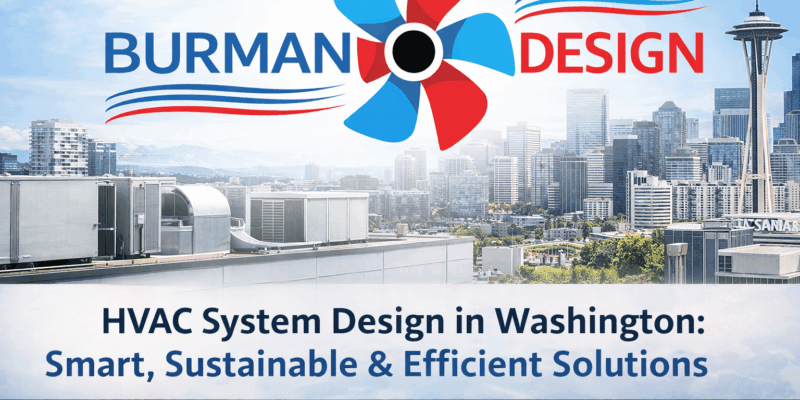
Modern buildings demand more than just heating and cooling—they require smart, efficient, and sustainable systems that deliver comfort while minimizing energy consumption. HVAC system design in Washington has evolved rapidly due to growing environmental awareness, strict energy regulations, and the demand for high-performance building solutions. Whether for residential, commercial, or industrial projects, well-planned HVAC systems play a critical role in improving indoor comfort and reducing operational costs.
In this blog, we explore how professional HVAC design and sustainable building systems in Washington can transform building performance and long-term value.
Understanding HVAC System Design
HVAC (Heating, Ventilation, and Air Conditioning) system design is the process of planning, engineering, and optimizing heating and cooling systems to meet a building’s specific requirements. It involves assessing building size, layout, climate conditions, occupancy patterns, and energy efficiency goals.
In Washington, HVAC system design must address unique challenges such as seasonal temperature variations, humidity control, and energy compliance standards. A well-designed system ensures:
-
Optimal indoor air quality
-
Consistent temperature control
-
Reduced energy consumption
-
Lower maintenance and operating costs
-
Compliance with local building codes
Professional HVAC designers use advanced tools and simulations to create systems tailored to each project, ensuring efficiency and reliability from day one.
Importance of Sustainable and Energy-Efficient Building Systems in Washington
With Washington’s strong focus on environmental responsibility, sustainable and energy-efficient building systems have become a priority for architects, developers, and property owners. These systems are designed to reduce carbon emissions, optimize energy usage, and enhance overall building performance.
Key benefits include:
1. Reduced Energy Costs
Energy-efficient HVAC systems consume less power, significantly lowering utility bills over time. Smart zoning, high-efficiency equipment, and advanced controls help optimize energy usage.
2. Environmental Sustainability
Sustainable building systems reduce greenhouse gas emissions and support Washington’s green building initiatives. Using renewable energy sources and eco-friendly materials further enhances sustainability.
3. Improved Indoor Comfort
Advanced HVAC designs provide precise temperature and humidity control, creating healthier and more comfortable indoor environments for occupants.
4. Compliance with Regulations
Washington has strict energy codes and building standards. Sustainable HVAC design ensures compliance with local regulations, avoiding penalties and project delays.
Key Elements of Effective HVAC System Design
To achieve high performance, HVAC system design must incorporate several critical factors:
Load Calculation
Accurate heating and cooling load calculations are essential to determine the right system capacity. Oversized or undersized systems lead to inefficiency and discomfort.
System Selection
Choosing the right HVAC system—such as VRF systems, heat pumps, or hybrid solutions—depends on building requirements and energy goals.
Smart Controls and Automation
Modern HVAC systems integrate smart controls, sensors, and building management systems (BMS) to optimize performance and reduce energy waste.
Ventilation and Air Quality
Proper ventilation design ensures fresh air circulation while maintaining energy efficiency, which is especially important in commercial and institutional buildings.
Integration with Sustainable Technologies
Integrating HVAC systems with solar panels, geothermal energy, and energy recovery systems enhances sustainability and long-term efficiency.
Why Professional HVAC System Design Matters
Investing in professional HVAC system design in Washington offers long-term advantages for building owners and developers. Expert designers consider both technical and environmental factors to create systems that deliver optimal performance and scalability.
Professional HVAC design helps:
-
Maximize energy efficiency and system lifespan
-
Reduce operational and maintenance costs
-
Enhance property value and occupant satisfaction
-
Support green building certifications like LEED
By partnering with experienced HVAC design specialists, businesses and homeowners can achieve smarter, greener, and more cost-effective building solutions.
The Future of HVAC and Sustainable Building Systems in Washington
The future of HVAC system design in Washington is driven by innovation, digitalization, and sustainability. Technologies such as AI-driven energy management, IoT-enabled HVAC systems, and net-zero building designs are reshaping the industry.
As Washington continues to prioritize environmental sustainability, demand for energy-efficient and eco-friendly HVAC solutions will continue to grow. Forward-thinking building owners who adopt sustainable HVAC designs today will benefit from long-term savings and environmental impact reduction.
HVAC system design in Washington is no longer just about heating and cooling—it’s about creating intelligent, sustainable, and energy-efficient building environments. By integrating advanced technologies and sustainable building systems, property owners can achieve superior comfort, reduced costs, and environmental responsibility.
If you’re planning a new construction or renovation project, investing in professional HVAC system design and sustainable building solutions is a strategic decision that delivers lasting value. With the right approach, your building can achieve optimal performance, energy efficiency, and sustainability for years to come.