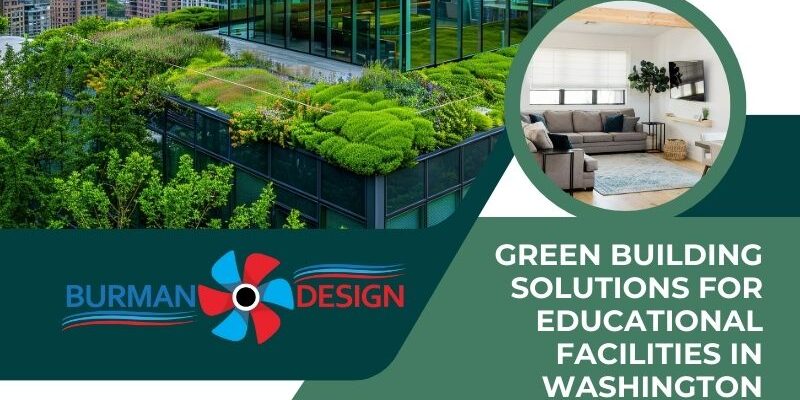
Educational institutions across Washington are increasingly embracing sustainability to create healthier, more efficient learning environments. With rising energy costs, environmental responsibilities, and evolving regulations, green building solutions for educational facilities in Washington have become a strategic investment rather than an option. Sustainable design not only reduces environmental impact but also improves indoor comfort, student performance, and long-term operational savings.
At Burman Design, green building strategies are thoughtfully integrated into educational projects to support environmentally responsible, future-ready campuses.
The Importance Of Green Building in Education
Schools and universities operate for long hours and accommodate large numbers of occupants, making them ideal candidates for sustainable design. Green building solutions help educational facilities:
-
Reduce energy and water consumption
-
Improve indoor air quality and occupant health
-
Lower operating and maintenance costs
-
Support state and national sustainability goals
-
Demonstrate environmental leadership to students
By incorporating sustainability into facility design, educational institutions set a powerful example for future generations.
Energy-Efficient Building Systems
One of the core components of green building solutions for educational facilities in Washington is energy efficiency. Mechanical and electrical systems are designed to deliver high performance while minimizing energy use.
Key energy-efficient strategies include:
-
High-efficiency HVAC systems
-
Energy recovery ventilation
-
Smart building automation and controls
-
LED lighting and daylight integration
These systems help schools maintain comfortable indoor environments while significantly reducing energy bills.
Sustainable HVAC and Mechanical Design
Mechanical engineering plays a central role in sustainable educational facilities. Efficient HVAC systems are designed to optimize comfort, airflow, and temperature control while conserving energy.
Sustainable mechanical solutions may include:
-
Variable refrigerant flow (VRF) systems
-
High-performance boilers and chillers
-
Demand-controlled ventilation
-
Zoning strategies for different building uses
Such designs ensure classrooms, laboratories, and common areas remain comfortable throughout Washington’s varied climate conditions.
Water Conservation and Efficient Plumbing Systems
Water efficiency is another critical element of green building solutions for educational facilities in Washington. Schools consume large volumes of water daily, making conservation strategies essential.
Green plumbing design often includes:
-
Low-flow fixtures and sensor-operated faucets
-
High-efficiency toilets and urinals
-
Rainwater harvesting systems
-
Greywater reuse where permitted
These measures help reduce water usage, lower utility costs, and support sustainable resource management.
Indoor Environmental Quality and Student Well-Being
A healthy indoor environment is fundamental to effective learning. Green building solutions focus on improving indoor environmental quality by enhancing ventilation, controlling humidity, and reducing indoor pollutants.
Benefits include:
-
Better air quality and reduced allergens
-
Improved acoustic comfort
-
Increased natural lighting
-
Enhanced thermal comfort
Research shows that well-designed, sustainable learning environments can positively impact student concentration, attendance, and overall performance.
Sustainable Materials and Building Practices
Green building solutions also extend to material selection and construction practices. Sustainable materials are chosen for durability, low environmental impact, and improved indoor air quality.
Common strategies include:
-
Use of low-VOC materials and finishes
-
Selection of recycled or locally sourced materials
-
Design for durability and ease of maintenance
These practices support long-term sustainability and reduce the building’s overall environmental footprint.
Compliance with Green Building Standards
Many educational facilities in Washington aim to meet recognized green building standards and energy codes. Green building solutions help schools align with sustainability frameworks and regulatory requirements.
This may include:
-
Support for LEED or similar certifications
-
Compliance with state energy codes
-
Integration of performance monitoring systems
Meeting these standards enhances building performance while reinforcing an institution’s commitment to sustainability.
Why Choose Burman Design
Burman Design delivers integrated green building solutions tailored to the unique needs of educational facilities. With a strong focus on performance, compliance, and long-term value, each project is approached with a collaborative and sustainable mindset.
Burman Design offers:
-
Expertise in sustainable mechanical and plumbing design
-
Customized strategies for educational environments
-
Coordination with architects and stakeholders
-
Designs that balance efficiency, comfort, and cost
This comprehensive approach helps educational institutions achieve meaningful sustainability goals.
Sustainability is shaping the future of educational facility design. Thoughtful green building solutions for educational facilities in Washington support energy efficiency, water conservation, and healthier learning environments. By partnering with an experienced firm like Burman Design, schools and universities can create campuses that benefit students today while protecting the environment for generations to come.